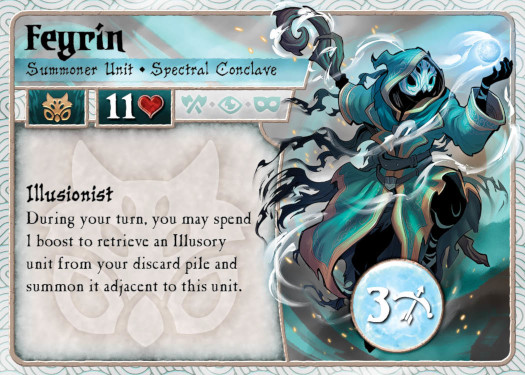
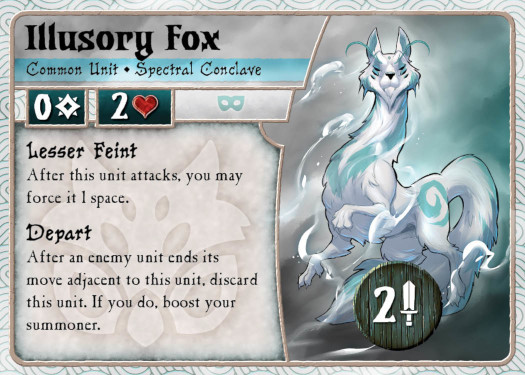
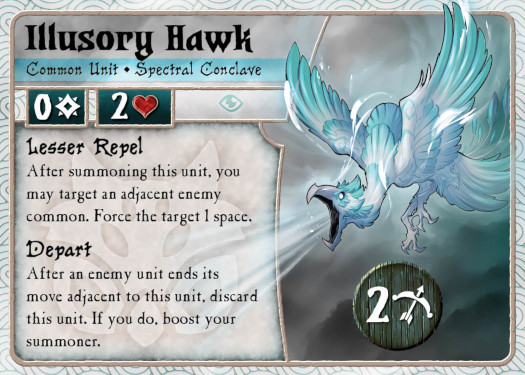
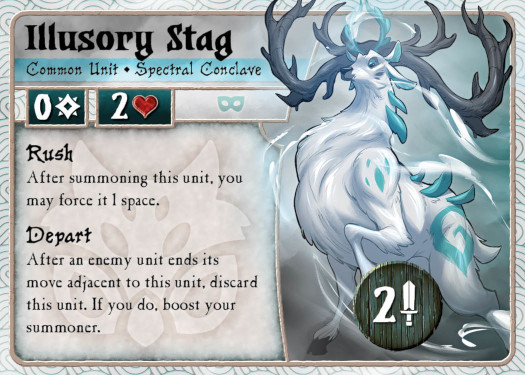
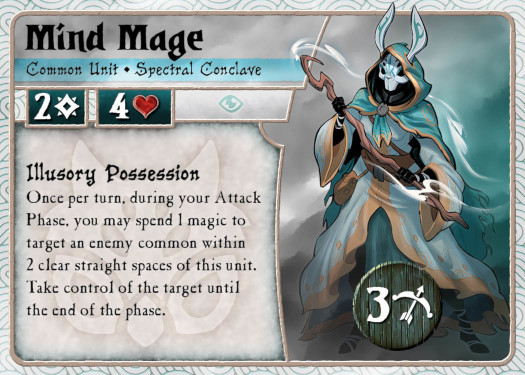
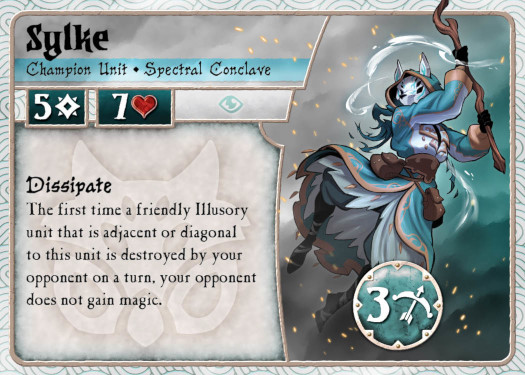
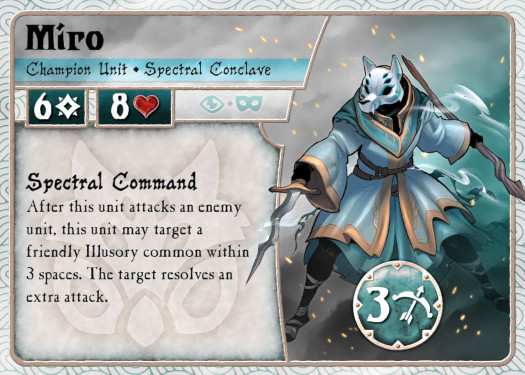
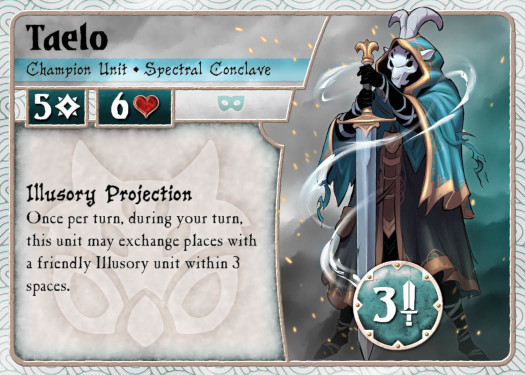
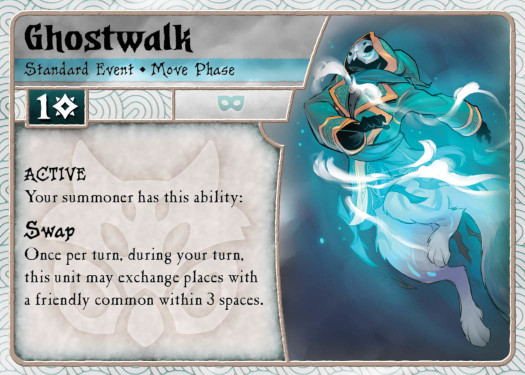
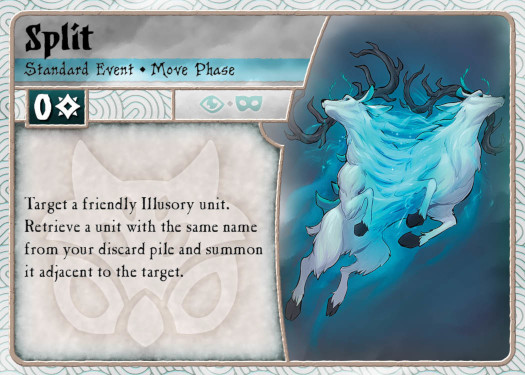
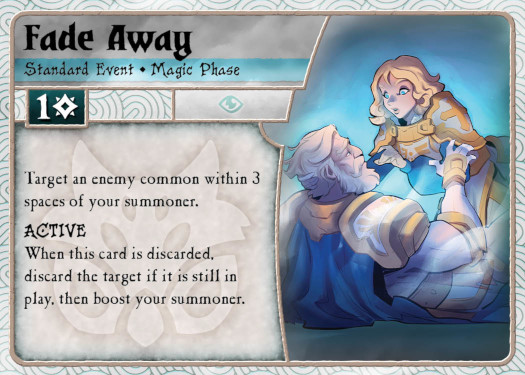
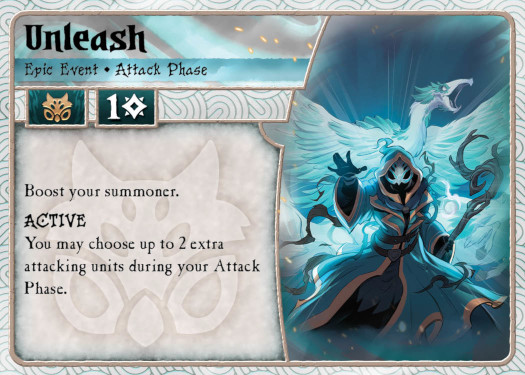
At the heart of the deck is the illusion master himself - Feyrin, who's ability (Illusionist) allows players to shape the battlefield to their command during any phase. Feyrin has no intrinsic way of generating boosts - therefore, his impact to the game is extremely dependent on how well Feyrin can place each illusion to maximize the chance for 'Depart' to trigger. Regardless of your strategy or matchup, SC players will always want to maximize the number of boosts that Feyrin builds up over the course of the game.
What really makes Feyrin's ability stand-out is the ability to use it during ANY phase - most notably being the move and attack phases. Using Illusionist during the move phase offers incredible reach - with upwards of 5 spaces (or even 6 with Stag). The attack phase allows Feyrin to function as a decent combat unit - with the ability to attack at range, then summon a unit in front to attack again down the same flank (and potentially serve as a fragile blocker). The true potential for assassination lies in combining the deck's epic event 'Unleash' with Feyrin's ability to summon an army of illusions to attack one exposed flank.
A quick note on positioning: while your Illusory commons may seem like cheap and easy meat shields, don't be fooled - it's just an illusion! Ok terrible joke out of the way, let's talk about some basic positioning tips:
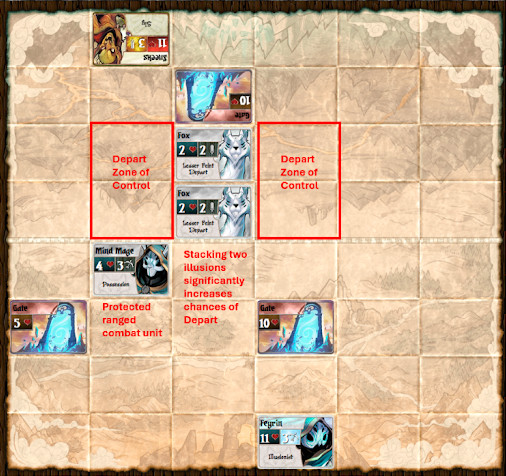
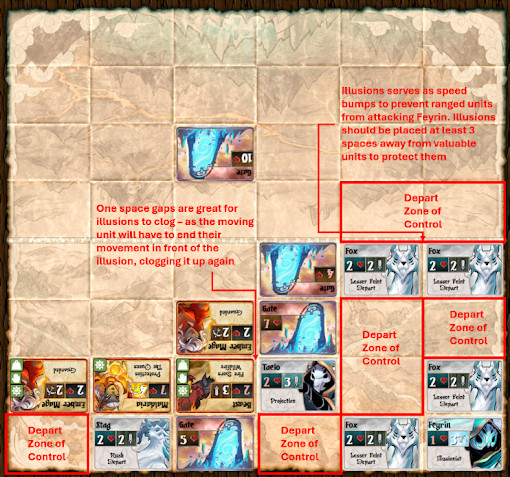
1. Stagger your gates and illusions. This means if you have a gate at B3, your next gate should be two over and one up/down (so D2 or D4). Not only does this optimize your summoning spots, but you'll be able to use Hawk to remove blocking units attempting to clog you. Staggering illusions also maximizes your area control and chances of triggering 'Depart'!
2. Do your best to leave 2 empty spaces between Feyrin (or any unit for that matter) and an illusion. This prevents a ranged unit from walking up, departing your blocker, then getting a shot in on the unit behind the illusion - since that unit will be out of reach.
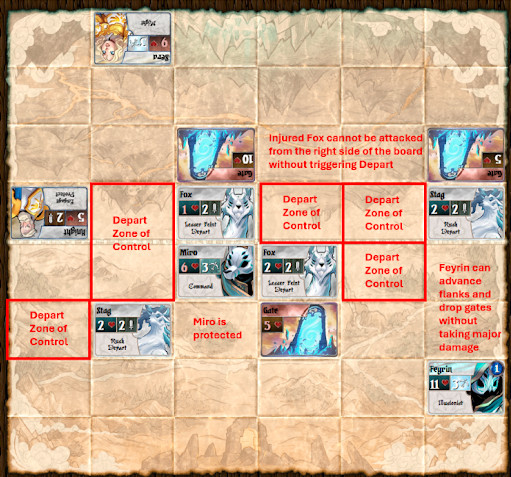
3. Advance along the flanks of the board - using enemy gates to protect your advance. Focusing on advancing up one side of the board allows you to focus controlling one area without risk of getting surrounded. If you can predict what spots the opponent will need to attack your illusions at range, you can manage positioning them much better during your advancement.